


 By
By Real Estate Law in Dubai: A Complete Beginner’s Guide to Property Laws and Rights
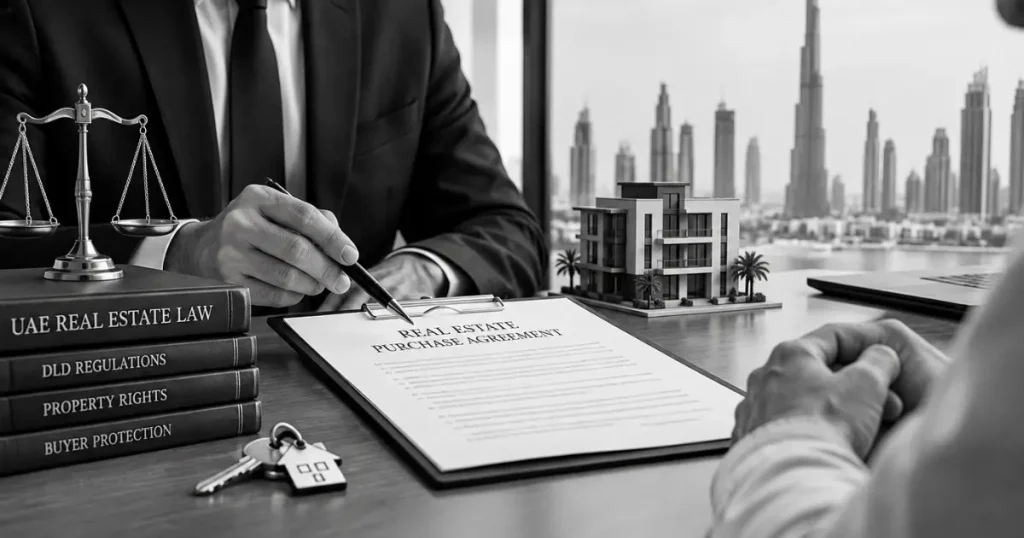
Real estate law in Dubai is important for anyone buying, selling, leasing, developing or investing in property in the emirate. Dubai’s property market attracts local and international buyers, but every transaction involves legal requirements that can affect ownership, registration, contracts, payments, development and dispute resolution.
For a first-time buyer, understanding these rules can make the difference between a properly protected transaction and an avoidable legal problem.
This guide explains the essential principles in straightforward language, including how property ownership works, the role of the Dubai Land Department (DLD), off-plan property rules, landlord and tenant matters, contracts, registration and property disputes.
Table of Contents
What Is Real Estate Law in Dubai?
Real estate law in Dubai refers to the laws, regulations, procedures and government systems governing property ownership and transactions in the emirate.
It covers areas such as:
- Buying and selling property
- Property registration and ownership records
- Freehold ownership
- Usufruct and other property rights
- Off-plan property
- Sale and Purchase Agreements
- Leasing and tenancy
- Developer obligations
- Jointly owned property
- Property-related disputes
- Registration and transfer procedures
The Dubai Land Department is the principal government authority responsible for real estate registration and a wide range of property-related services. DLD’s official information confirms that ownership and other real estate transactions are recorded through its registration framework.
For buyers, this means that a property transaction should not be assessed only according to its price or expected investment return. The legal status of the property, ownership records, contract terms and registration requirements are equally important.
1. Who Regulates Real Estate in Dubai?
Understanding the main authorities is one of the first steps in understanding real estate law in Dubai.
Dubai Land Department
The Dubai Land Department handles important real estate registration and property services in Dubai.
DLD’s official FAQ states that an owner is a person registered in the real estate registry as an owner, including through purchase, mortgage, inheritance or other recognised means. DLD also states that Dubai legislation requires real estate transactions to be registered in its registers.
Real Estate Regulatory Agency
The Real Estate Regulatory Agency (RERA) operates within DLD and regulates important areas of Dubai’s real estate sector, including real estate licensing and aspects of development and jointly owned property regulation.
This is particularly relevant for developers, brokers, property managers and off-plan buyers.
Rental Disputes Center
The Rental Disputes Center (RDC) provides a specialised judicial system for rental and certain jointly owned real property disputes.
The RDC states that it has jurisdiction over rental disputes between landlords and tenants in Dubai, including free zones, subject to the exceptions established by law. It also handles certain disputes involving jointly owned real property.
You can review the official Rental Disputes Center services to understand the available procedures.
2. Can Foreigners Own Property in Dubai?
Yes. Foreign nationals can own property in designated areas of Dubai, subject to the applicable laws and regulations.
Dubai Law No. 7 of 2006 provides the framework for real property registration. Article 4 allows non-UAE nationals to acquire freehold ownership in relevant areas determined by the Ruler, as well as usufruct or lease rights for periods of up to 99 years.
DLD’s current FAQ also confirms that foreign ownership is available in freehold areas.
Before buying, a foreign investor should therefore check:
- Whether the property is located in a designated ownership area
- What type of property right is being acquired
- Whether the seller is the registered owner
- Whether there is a mortgage or other restriction
- Whether the property information matches the transaction documents
- What registration procedures apply
- Whether additional approvals or documents are required
The legal structure can vary depending on the property and transaction. For a significant investment, independent legal due diligence can help identify problems before funds are transferred.
3. Why Is DLD Registration Important?
DLD registration is a fundamental part of the Dubai property system.
DLD’s official FAQ states that Dubai’s real estate legislation requires real estate transactions, including ownership and transfer, to be registered in DLD’s registers. It further states that unregistered transactions are considered invalid under the applicable framework.
This means a buyer should not treat a privately signed document as the only important part of the transaction.
Before completing a purchase, consider checking:
- The property’s registered details
- The seller’s legal authority to sell
- Existing mortgage information where relevant
- The agreed purchase price
- Payment obligations
- Transfer documentation
- Registration requirements
- Any restrictions affecting the property
- Outstanding contractual obligations
- The final ownership documentation
DLD also provides an official service for registering initial sales of off-plan units and land plots whose value has not been fully paid.
For practical guidance before signing, see our legal tips before signing a property deal in Dubai.
4. What Property Contracts Should Buyers Understand?
Contracts are a major part of real estate law in Dubai because property transactions commonly involve several documents rather than one agreement.
Depending on the transaction, documents may include:
- Memorandum of Understanding (MOU)
- Sale and Purchase Agreement (SPA)
- Booking or reservation documents
- Mortgage documentation
- Transfer documents
- Property management agreements
- Tenancy agreements
- Ejari registration
- Jointly owned property documents
The exact legal effect of each document depends on its wording, the circumstances of the transaction and applicable law.
Important provisions can include:
- Purchase price
- Payment deadlines
- Completion obligations
- Handover conditions
- Default provisions
- Termination rights
- Refund provisions
- Representations and warranties
- Registration obligations
- Responsibility for fees and expenses
- Dispute-resolution provisions
A buyer should not assume that a verbal explanation from a broker or salesperson has the same legal effect as a properly documented contractual term.
This is one reason independent legal review can be valuable before signing a high-value or complicated property agreement.
5. What Does Real Estate Law in Dubai Say About Off-Plan Property?
Off-plan transactions require additional due diligence because the property may still be under development.
A buyer should investigate the project and transaction before making substantial payments.
Important checks can include:
- Project registration
- Developer details
- Applicable escrow arrangements
- SPA terms
- Payment schedule
- Construction obligations
- Expected completion and handover
- Registration procedures
- Cancellation provisions
- Default provisions
- Remedies for contractual breaches
DLD’s regulatory framework includes procedures for registering initial sales of off-plan units through the provisional register. Its official service explains that developers can register units sold off-plan or land plots whose value has not been fully paid.
Buyers can also verify project information before proceeding.
Our guide on how to check the status of a real estate project in Dubai can help with the initial due-diligence process.
If an off-plan project is delayed, cancelled or otherwise affected by a contractual problem, the buyer’s rights will depend on the contract, applicable legislation and the facts of the case.
6. What Rights Do Landlords and Tenants Have in Dubai?
Leasing is another important area of real estate law in Dubai.
Landlords and tenants should understand both their contractual obligations and the applicable rental rules.
Common issues include:
- Rent payments
- Lease renewal
- Rent increases
- Security deposits
- Maintenance responsibilities
- Property access
- Notices
- Eviction
- Early termination
- Ejari registration
- Breach of the tenancy agreement
- Recovery of unpaid amounts
The correct legal position can depend on the tenancy agreement, notices, applicable legislation and circumstances of the dispute.
Where a matter falls within RDC jurisdiction, the centre provides conciliation and judicial services for rental disputes. Its official services include amicable settlement, first-instance rental cases, appeals and enforcement procedures.
The RDC also states that certain free-zone rental disputes and other specified matters fall outside its jurisdiction where special courts or specific legal arrangements apply.
For a detailed tenancy topic, see our complete guide to rent increase rules in Dubai.
7. What Are the Most Common Property Law Mistakes?
Many property disputes begin with problems that could have been identified earlier.
Signing without reviewing the contract
Buyers sometimes focus on the price and payment schedule while overlooking default, cancellation, completion or liability provisions.
Relying on verbal promises
Important promises should be properly documented rather than left as informal statements.
Failing to verify ownership
A buyer should confirm relevant ownership and registration information before transferring significant funds.
Ignoring existing obligations
Mortgages, service charges, contractual liabilities and other obligations can affect a transaction.
Assuming every dispute uses the same procedure
A rental dispute is not necessarily handled in the same way as a developer dispute, ownership dispute or contractual claim.
Waiting until a dispute escalates
Early legal review can sometimes identify available options before a contractual deadline expires or a disagreement becomes more difficult to resolve.
For additional protection, see our guide to real estate fraud cases in Dubai.
8. When Should You Hire a Real Estate Lawyer in Dubai?
A lawyer can be useful where a transaction involves substantial financial exposure, complex contracts, cross-border ownership, developer risk or an existing dispute.
You may consider legal advice when:
- Buying or selling high-value property
- Purchasing off-plan property
- Reviewing an SPA or MOU
- Buying through a company
- Dealing with developer delays
- Seeking cancellation or a refund
- Investigating possible property fraud
- Facing a contractual dispute
- Dealing with a landlord or tenant dispute
- Reviewing inheritance or succession issues
- Buying property from overseas
- Preparing for a property-related legal proceeding
Legal assistance is not limited to litigation. Preventive legal review can help identify contractual and transaction risks before they become expensive disputes.
For more information, read our guide on what to expect from a real estate law firm in Dubai.
9. How Are Property Disputes Resolved in Dubai?
The appropriate dispute-resolution route depends on the type of property dispute.
A disagreement may involve:
- Buyer and seller
- Buyer and developer
- Landlord and tenant
- Co-owners
- Property managers
- Contractors
- Service providers
- Contractual claims
- Ownership issues
- Registration-related matters
For rental disputes within its jurisdiction, the RDC provides conciliation and judicial procedures. Its official amicable-settlement service allows parties to seek a legally recognised settlement before proceeding through litigation.
The RDC’s current services include first-instance rental cases, jointly owned property cases, appeals and enforcement procedures.
However, not every property dispute belongs before the RDC. The appropriate forum depends on the nature of the dispute, the property, the parties, the contract and the applicable legislation.
For a broader overview, see our guide to property disputes in Dubai.
10. How Can Buyers Protect Themselves?
A practical due-diligence process can reduce avoidable property risks.
Before signing a contract or transferring substantial funds, consider this checklist:
- Verify the property and relevant registration information.
- Confirm the seller’s authority to sell.
- Check for relevant mortgages or restrictions.
- Review the SPA, MOU and related documents.
- Confirm payment milestones and deadlines.
- Understand cancellation and default provisions.
- Check developer and project information for off-plan purchases.
- Understand applicable escrow arrangements.
- Confirm transfer and registration procedures.
- Keep important communications in writing.
- Obtain independent legal advice for complex transactions.
- Act promptly if a contractual breach or dispute occurs.
DLD provides official information and services relating to property registration and transactions, making its website an important primary source for buyers and investors.
Real Estate Law in Dubai: What Should You Do Before Signing?
Before signing a property agreement, look beyond the purchase price.
Check the property’s legal status, ownership information, contract terms, payment obligations, registration requirements and the consequences of default or cancellation.
This is particularly important for:
- First-time buyers
- Overseas investors
- Off-plan purchasers
- High-value transactions
- Buyers using company structures
- Transactions involving mortgages
- Buyers dealing directly with developers
- Parties already facing a contractual disagreement
A legal review before signing can be considerably more useful than discovering a contractual problem after money has already been transferred.
Frequently Asked Questions About Real Estate Law in Dubai
Is real estate law in Dubai applicable to foreign buyers?
Yes. Foreign ownership is permitted in designated areas under the applicable Dubai property laws. Law No. 7 of 2006 provides the framework for foreign ownership rights, while DLD confirms that foreign ownership is available in designated freehold areas.
Can foreigners own freehold property in Dubai?
Yes, where the property is located in an area designated for foreign ownership. The applicable property rights should be confirmed before completing the transaction.
Does every property transaction need to be registered with DLD?
DLD states that Dubai’s real estate legislation requires real estate transactions to be registered in its registers and explains that registration is important for protecting property rights.
What should I check before buying an off-plan property?
Check the project registration, developer, SPA, payment schedule, applicable escrow arrangements, completion provisions, handover requirements and contractual remedies for delay or default.
Can an overseas buyer purchase property in Dubai?
Overseas buyers can acquire property where the applicable ownership rules permit it. The transaction may also involve identification, documentation, payment and registration requirements that should be checked before completion.
Where can a landlord or tenant resolve a rental dispute?
A rental dispute falling within the jurisdiction of the Rental Disputes Center can be submitted through the RDC’s available conciliation or judicial procedures. The RDC states that it has jurisdiction over rental disputes between landlords and tenants in Dubai, subject to specified exceptions.
Do I need a lawyer to buy property in Dubai?
Not every transaction requires the same level of legal assistance. However, independent legal advice can be particularly useful for high-value transactions, complex contracts, off-plan purchases, overseas buyers, developer disputes and potential litigation.
What is the role of DLD in property transactions?
DLD maintains the real estate registration framework and provides services connected with property ownership and transactions. Its official FAQ provides information about ownership, registration and foreign ownership.
Final Takeaway
Real estate law in Dubai provides the framework for property ownership, registration, transactions, development, leasing and dispute resolution.
For buyers and investors, the most important point is that property should be treated as both a financial and legal transaction.
Before signing, verify the property, review the contract, understand your obligations, confirm the applicable registration process and identify what happens if the transaction does not proceed as planned.
For off-plan purchases, overseas investments, complex ownership structures and significant property transactions, independent legal advice can help identify risks before they become disputes.
If you are buying property, reviewing a property contract, dealing with a developer, facing a property dispute or need legal guidance about a Dubai real estate transaction, you can contact Ahmad Abdulla Ahli Advocates & Legal Consultants to discuss your circumstances and available legal options.
8 Comments